

Pedal Power
With summer on our doorstep and days getting longer and warmer many people are taking to the outdoors to find their fitness fix. And, what better way to enjoy this country’s spectacular natural areas and climate than through mountain biking or cycling. Many have set the annual 94.7 Cycle Challenge as their goal, and with the event around the corner beginners and experienced cyclists alike have been taking to streets and off-road trails in preparation.
Aside from knowing where the best spots are to enjoy a post-cycle breakfast, what else do cycling enthusiasts really need to know? Fitness and preparation for any sporting activity include understanding the associated risks – making this an opportune time to delve into common cycling injuries.
There will always be traumatic injuries that result from falls and other unplanned adverse events, the effect of which a physiotherapist will do their best to mitigate, to encourage healing. However what many physiotherapists deal with is the effect on the body of the repetitive motion and rhythm of cycling, which can cause what is called a repetitive strain injury due to incorrect biomechanics.
Common biomechanical faults:
- Forward head posture with craniovertebral extension (causing many cyclists to suffer neck pain)
- Thoracic kyphosis (the spinal curve being exaggerated due to the cycling position)
- Posterior pelvic tilt (the pelvis tilted backwards)
- Hip adduction and internal rotation (the hip turned inwards and across the body also due to the cycling position)
These postural problems can be minimized far in advance of commencing cycling by spending a little extra money on ensuring that a bicycle is set up correctly for an individual’s unique physiology – by a professional.
Something as simple as making sure your saddle is at the correct height and that your cleats are in the right position – and not rotated – can go a long way towards preventing much future discomfort and injury.
That said, the cycling position is not a natural one and following training in this position for extended periods of time many cyclists develop weakness of their hip extensors (which move hips backwards), their abductors (which move hips outward), lateral rotators (which turn the hips out to the side) and over activity of the hip flexors (which move hips forward), the adductors (which move hips inwards) and the medial rotators (which turn hips inward).
It is also very common for cyclists to have very tight calf muscles, which affects range of movement at the ankle making cyclists more prone to injury in that area. Remember to always stretch hip flexors, adductors, medial rotators as well as the calf muscles adequately before and after training.
It’s very important for cyclists to strengthen their hip extensors, abductors and lateral rotators. A very good way to do that is to start cross training i.e. exercising off the bike to target these muscle groups through other forms of exercise. It has also been shown that cyclists have a lower bone density -especially in the lumbar spine and hips – due to excessive calcium loss through sweating and all the hours spent on the bike. As cycling is a non-weight bearing activity it doesn’t promote an increase in bone density, but cross training – particularly doing weight-bearing exercises – will ensure bone density remains optimal.
Regards
Andrew Savvides
PhysioPRO
BY:
General Health/Fitness / Lower Limb injuries

Going BARE Part 3

So in the last two articles, Mitesh discussed the relative advantages and disadvantages of barefoot running. It still comes down to personal preferences and some people are quite rightly saying, “But people have run marathons in running shoes for years and are ok, so why should I change?” Well, although this may be the case DURING their running careers, many of those long distance athletes are only NOW starting to suffer from knee, hip and ankle degenerative changes at a later age. Are their running shoes to blame or the distances they ran? No one can really say for sure, but since the evidence does show that running with shoes does increase the forces generated at the knee and hip during running, we can deduce that this contributes to their injuries.
But how does one start barefoot running? Do you suddenly ditch the expensive running shoes and take to the road?
The answer is NO, unless you want bad blisters and pain…!!
In his book entitled Barefoot running step-by-step, (it’s a worthwhile read if you want to take barefoot running more seriously, as is Born to Run-Christopher McDougall) “Barefoot” Ken Bob suggests the following program in order to ease into running without shoes.
| Week 1 | Week 2 | Week 3 | Week 4 | |
| Mon | 5 min | 10 min | 15 min | 20 min |
| Wed | 5 min | 15 min | 15 min | 20 min |
| Fri | 10 min | 15 min | 20 min | 25 min |
The above is for injured or novice barefoot runners and he also gives a different table for non-injured veteran runners. Also, expect some small blisters and callous formation as this is part of “hardening” the foot.
Some important points to note when getting started:
- SLOWLY! Go slow at first and get used to it. If you do too much to quick you will most likely develop injuries.
- Walk around barefoot at home or in the garden as often as possible.
- Run “quietly”. Imagine you are running through a room of sleeping lions! If your foot hits the ground with a thud, then you are not absorbing shock correctly. To do this:
- Shorten your stride (take smaller steps) to avoid hitting your heel against the ground. You should rather be landing on the ball or mid-foot section of the foot.
- Make sure your knee doesn’t straighten out all the way when you swing it forward.
- Avoid bouncing up and down. Keep a smooth, “light” feeling to the run.
People tend to start barefoot running on soft ground, but this is not ideal, as you are unaware of the impact you are actually placing on the foot. Rather start on a hard surface and you will quickly realise if you are going too fast/hard.
One last thing on minimalistic shoes (like Vibram’s 5 finger), yes they are good for protection and to get used to less cushioning, but they don’t give the same level of feedback as your naked skin which is the important part. If going barefoot is a 10/10, then minimalistic shoes are 3/10 and normal running shoes 1/10. That’s according to the hard-core bare footers!
My suggestion is to “supplement” your regular running with some barefoot/minimalistic running in between. Use it to strengthen the small foot muscles and alter your running biomechanics so that you place less impact on your joints. It’s quite addictive though and actually feels great having the dirt between your toes again…just like when you were a kid.
Ric@PhysioPRO
BY: Riccardo Vaccaro
Foot injuries / General Health/Fitness / Lower Limb injuries

Going bare…Part 2
One of the theories of man being adapted for barefoot running is that evolution once saw us as being persistence hunters. Man has a highly evolved thermoregulation and breathing system, whereas animals must pant to take in air to cool their organ systems. So, we were able to ‘run down’ our prey for several hours, resulting in the animal simply collapsing from sheer exhaustion and overheating (Persistence hunting)…Food for thought…
Although we appear adapted to running bare, there are definitely some Disadvantages of Barefoot (minimalistic) Running. Here we mention these cons…
If you have no problems and no pain, do you really need to change anything? … Why fix what isn’t broken?…
Glass, nails, rocks, thorns and other bits and pieces can injure our feet. Shoes save our feet and also offers protection from blistering (on hot surfaces) and frostbite (on cold surfaces).
Switching to a minimal shoe or starting to go shoeless will usually result in blisters for the first few weeks until calluses are formed.
For most of us modern athletes, going minimalist will be a shock to our feet and our running system of muscles and joints will be overwhelmed. This could lead to injuries such as Achilles tendinitis, calf strain or medial knee pain when the typical heel lift is removed from the shoes.
The sole of the foot (plantar surface) is usually soft and tender. Going without a generously soled shoe may initially cause plantar pain, and raise the risk of plantar fasciitis (inflammation within the sole of the foot).
And…let’s face it: It looks a little strange, so people will notice, and they may stare 🙂
BY:
Foot injuries / General Health/Fitness / Lower Limb injuries
Going BARE
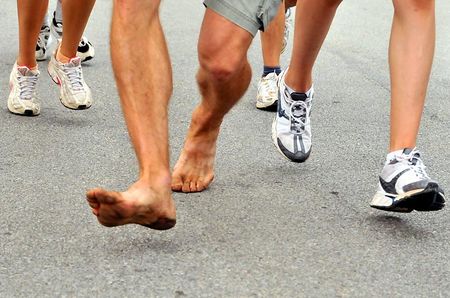
In this next series of articles, The PhysioPRO team will discuss the latest craze of BAREFOOT RUNNING. We’ll tell you why its becoming so big, what the research says and also how to get started if you choose to do so…
To kick things off, Mitesh tells us if barefoot running is really good for you, or just another “power-balance” moment.
Remember the good old days when we were younger, laughed all the time…and ran barefoot in the garden…on the beach…even in the veld (…if you were lucky enough)…
Barefoot running as the name states is simply running without wearing any shoes on the feet. Running in thin-soled, flexible shoes, often called minimalist running, is biomechanically related to running barefoot. Barefoot running presently the source of much speculation and debate…begging the question, “is barefoot running good or bad for you?”

Scientists have found that those who run barefoot, or in minimal footwear, tend to avoid “heel-striking,” and instead land on the ball of the foot or the middle of the foot. In so doing, these forefoot runners use the architecture of the foot and leg to avoid hurtful and potentially damaging impacts, equivalent to two to three times body weight, that affect heel-strikers repeatedly.
According to a published article, in Nature magazine, “Humans have engaged in endurance running for millions of years, but the modern running shoe was not invented until the 1970s. For most of human evolutionary history, runners were either barefoot or wore minimal footwear such as sandals or moccasins with smaller heels and little cushioning.”
Although barefoot running or wearing minimal footwear may not be the fix for all injuries, there are some compelling claims for hitting the dirt running … literally 🙂
Development of a more natural running pattern (gait) and strengthen the deep muscles, tendons and ligaments of the foot.
Removing the heel lift of most shoes may help reduce injuries, such as calf strain or Achilles tendinosis, by stretching the leg muscles.
Runners will naturally land on their forefoot rather then the heel. The heel strike during running only came about because of the excessive padding of running shoes, but research shows this isn’t the most effective natural running stride. The most efficient runners land on the forefoot and keep their strides smooth, short, light and flowing. Landing on the forefoot also allows your arches to act as natural shock absorbers.
You may improve balance and proprioception. Without shoes, you activate the smaller muscles in your feet, ankles, legs, and hips that are responsible for better balance and coordination.
Research with regard to barefoot running points to either advantages or disadvantages. Some runners swear by barefoot running and others run injury free wearing running shoes. It may be impossible to come to a conclusion as to which is best.
All runners are different and what works for one, may not work for another.
Mitesh@PhysioPRO
BY:
Foot injuries / General Health/Fitness / Lower Limb injuries
WARMING-UP
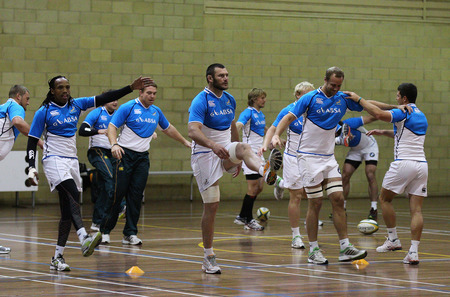
Should one warm-up before physical activity? Almost every professional athlete does, but what is the correct way, and for how long? The honest answer is…we don’t know!
Warming-up is said to do a number of physiological things, such as:
- Increased blood flow to muscles
- Increased oxygen delivery to muscles
- increased speed of nerve impulses
- Increased body temperature which allows muscle enzymes to become more efficient
- Enhanced cellular metabolism
- Decreases stiffness of connective tissue and the list goes on…
In theory, all these factors improve muscular performance and therefore lead to improved athletic ability, but whats missing is credible evidence.
Some elite level athletes choose to do short warm-ups, whereas others warm-up nearly as long as they exercise. For example, some Tour de France riders warm-up for almost one and a half hours before their ride! That’s as long as my entire cycle…
A recently conducted review of evidence showed that with warming-up, there is a 79% increase in performance and almost no negative effects from warming-up, so it IS VERY NECESSARY. At present though, there is no data to prescribe on intensity or duration of warming-up, however it is suggested that for short, high intensity events, warming-up should be of a similar high intensity. Conversely for long endurance events, warming-up should be less so.
One guideline is to produce some mild sweating without any physical fatigue, and to also time the warm-up properly, as the effects don’t last longer than 30 minutes.
So basically, find the warm-up routine that works for you and stick to it, because right now, no one can prove you are wrong…
Look out for my next article on the new craze-BAREFOOT RUNNING
Ric@PhysioPRO
BY: Riccardo Vaccaro
General Health/Fitness

Take a DEEP breath

Many people ask me about the role that breathing plays while one is working out and exercising. Simply put, it plays a very significant role! Your breathing will absolutely affect your performance.
Incorporating these dynamics into your workout can help you maximize your performance:
- Muscles are at their weakest when you inhale
- While holding your breath your muscles can demonstrate their full power
- Muscle strength begins to decrease as you exhale
Many believe holding your breath while exercising is not a good idea. This is true to a certain extent. Holding your breath puts a certain amount of pressure on your heart – fine if you are in good health – but for someone with cardiac problems it could be dangerous and therefore breath holding is not recommended. The longer you hold your breath while working out the more quickly you tire and fatigue, as your muscle will be contracting maximally and not receiving enough oxygen.
Holding your breath is a natural reflex – especially while recruiting maximum muscle contraction. While your breath is held, strength, precision of movement, concentration as well as reaction time are all briefly improved. Holding your breath also tightens your spinal column, which helps to protect it while the column is subjected to great pressure from the exertion of exercise.
Taking all of this into account, while training with heavy weights hold your breath for as short a time as possible (to prevent fatiguing too quickly) at exactly the moment when the movement/exercise is the hardest ( to utilize the muscle’s maximum power).
If you are working with light weights or for a long period of time, then holding your breath is not recommended and you should try to breath as much as possible to avoid depriving your muscles of oxygen. Exhale during the harder sections and inhale during the easier sections of the movement/exercise.
While stretching you want your muscles to relax, so you should inhale while stretching in order for the muscle to stretch further.
An important muscle in respiration is the diaphragm. For specific exercises to strengthen this vital muscle contact your nearest PhysioPRO!
Happy Training Everyone!
Andrew@PhysioPRO
BY:
General Health/Fitness

To stretch or not to stretch?
If you are like me, you probably had a coach, PT teacher or fitness instructor that told you to ALWAYS stretch before sports. The reason being it “loosened” your muscles in preparation for activity and prevented injury. Truth is, none of that is supported by science…
If you keep up to date with this topic, you’ve probably heard that STATIC stretching before activity is not recommended. In a static stretch, the muscle is held in its elongated position for 15-30 seconds. This is what most coaches and trainers had us doing before sport. What we know now is that static stretching actually reduces performance. Some studies even showed that static stretching reduced the elasticity and electrical activity of muscles.
The easiest way of understanding this is if you consider how we get rid of a cramp. Cramps are usually caused by “hyper” excited muscles going into a state of uncontrolled contraction, and by stretching out the cramp, your muscle relaxes. In layman’s terms, the muscle “calms down” through stretching, so why would you want to calm the muscle down just before a race or event?
Then DYNAMIC stretching became the new buzz word in the field. With dynamic stretching, the muscle being stretched is actively lengthened through a movement, and the end position is not held. For example, a dynamic stretch of the quadriceps (front thigh muscle) is to kick your bum with your heel.
So what evidence do we have for dynamic stretching? Well at present most studies are poor quality, but they seem to suggest that dynamic stretching is beneficial, however with this type of stretch, we cannot distinguish the effect of muscle warm up versus muscle stretching, so the jury is still out on this one.
According to some research, runners who stretched prior to running had poor economy and reduced performance. Basically the non-stretchers used less energy during the same run and had better finishing times compared to the group that stretched!
Finally, should one stretch after an event? Does it improve recovery, prevent injury and reduce muscle soreness? At the moment, researchers suggest STATIC stretching post-event to lengthen the muscle and reduce the risk of lower limb injury. So, instead of having a nice group chat at the end of training, take your stretching a bit more seriously and it will improve flexibility and reduce your chance of injury. As for muscle soreness, well apparently there is no scientifically proven benefit from stretching.
So what should you do?
To sum-up, if you are already stretching before an event, consider changing to some dynamic stretches. Work on your static stretching after the event, and if you are trying to lengthen a muscle (say you have tight hamstrings), then it is vitally important to stretch them through static stretches 2-3 times per day until you have regained normal muscle length. If you need some advice or assistance with these stretches, then pop in to your nearest PhysioPRO branch and we will gladly show you how.
Look out for my next article on warming up before exercise.
Ric@PhysioPRO
BY: Riccardo Vaccaro
General Health/Fitness

Getting to the POINT-Dry Needling
At the mere mention of needles, many people become nervous and apprehensive. Some go so far as to associate them with pain and discomfort and prefer not to have any form of needling done in their treatment sessions. This is puzzling to me as, often, their reason for visiting a specialist is to deal with the presence of existing pain and discomfort. To the credit of this therapeutic technique, any discomfort felt will be momentary and overshadowed by the long term benefits of Dry Needling in easing muscle pain.
The needle is the most effective instrument available to therapists to stimulate the Peripheral Nervous System through muscle receptors. It is also an effective means through which to release Myofascial trigger points – physio speak referring to a hyperirritable spot normally within a taut band of muscle.
Trigger points may:
- Refer pain
- Alter sensation
- Affect joint and muscle range of movement
- Cause muscle weakness
(See previous articles for more information on trigger points).
Furthermore, many patients confuse Dry needling and Acupuncture. Even though the needles are the same and 71% of Myofascial trigger points overlap with classical acupuncture points (Melzack), the premise of each technique is very different. Unlike Dry Needling, Acupuncture is a branch of Chinese medicine in which the needles are used to target specific points that provide access to the meridians in the body through which Qi (energy) flows. Acupuncture aims to balance the energy.
Dry Needling offers both Superficial and Deep needling:
Superficial Dry needling involves the use of short, narrow needles placed into the tissue directly over the trigger point or painful area. The pin prick stimulates so-called A delta fibers which are faster than the fibers which carry the pain stimulus (C fibers). The stimulation of the A delta Fibers therefore reaches pain receptors first with the effect of assisting to block out pain (see diagram below). In fact, similar pathways are involved in the way in which rubbing a sore toe that’s been bumped can help to ease that pain.

Deep Dry needling sees a needle placed directly into the trigger point. Thus much longer needles are used to reach the trigger points in the muscles. Insertion of the needle in this way triggers a host of physiological responses which ultimately see the release of the myofascial trigger point. What one could expect to feel during needling is a deep muscle ache, referred pain or a local twitch response when the muscle being needled jumps or twitches as the trigger point is accessed. Patients are often concerned when this happens but specialists will reassure them that this response is a critical element of successful therapy and is in fact encouraged.
After undergoing needling it is very important that one stretches the muscles that have been needled and applying heat can ease any stiffness.
Needling is not to be seen as an isolated treatment. It is one of many techniques available to a physiotherapist in treating a patient holistically and effectively. It is my hope that this information will go some way towards removing the fear associated with the therapeutic tool that is Dry Needling.
Andrew@PhysioPRO
BY:
Back injuries / General Health/Fitness

Those ANNOYING things that mimic
Trigger points are hypersensitive areas within a muscle belly, commonly called “knots” that when stimulated, usually refers pain in areas around and away from the actual trigger point. They MIMIC pain in predictable band(s) away from the trigger point and also cause contractions in muscles that form taut bands… A trigger point is simply a small contraction within a muscle that can be excruciatingly painful.
Common ways in which trigger points mimic other conditions:
Weight-bearing on one leg more than the other (usually when we’ve had an injury to one side, we bear less weight on that side for example), can cause trigger points to develop in the gluteal muscles. Looking at this pain pattern, we could assume this to be sciatica. Sciatica is the description of a pain pattern and not a true diagnosis. (Fig.A below)

Another scary referral pattern is when a patient complains of severe pain in the left side of chest and down into the left arm. After appropriate testing for a possible heart problem is found to be negative, trigger points in the pectoral (chest) muscles are a likely cause for the chest and referred pain down into the arm. This pain referral pattern closely mimics that of a heart attack…and more often then not, they’re just as painful and stressful.
 Severe headaches have become all too common. More often than not, after conducting many scans and tests, the muscles in and around the neck and jaw are found to be harbouring trigger points that are causing the headaches. These muscles contract strongly and can compress nerves and blood vessels causing muscle and nerve pain.

Other severe presentations that may involve trigger points as their cause are the 6-pack abdominal muscles mimicking appendicitis and other abdominal pains.
A wide range of sports injuries including: Tennis Elbow, Shin Splints, Biceps Tendonitis and Bursitis, may involve muscles that mimic and these conditions.
There may be various causes that flare-up trigger points, these may include:
Long term or very sudden overuse of muscles, activation by other trigger points usually in neighbouring muscles, disease, psychological distress (via systemic inflammation), post-surgery, direct trauma to the region, when nerves do not function properly along their path (radiculopathy), infections and chronic health issues such as diabetes, arthritis, smoking, etc.
Common treatment modalities we would use at PhysioPRO to treat trigger points could include:
- Proper diagnoses of trigger points and appropriate referral if serious pathology is suspected.
- Myofascial release techniques and ischaemic pressure.
- Dry-needling.
- Muscle energy techniques.
- Posture correction, Strapping and Taping techniques.
- Proper muscle activation, muscle and movement re-education.
For thorough assessment and comprehensive treatment kindly contact us….
BY:
Back injuries / General Health/Fitness / Lower Limb injuries / Upper Limb injuries