
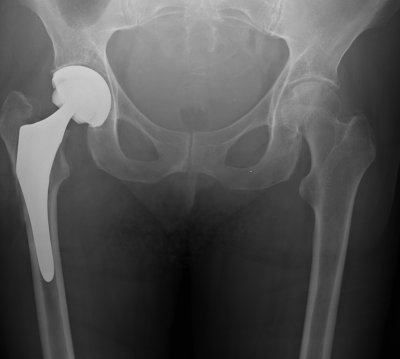
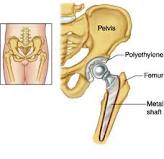
A Total Hip Replacement – or THR as we like to call it in this business – is a surgical procedure in which diseased cartilage and bone, located at the head of the femur and acetabular cap, are replaced with artificial materials (a prosthesis).
More often than not, this is an elective procedure. Therefore, many older patients come to me for advice on whether or not to go for a THR. What I always tell them is that as with any surgical procedure there are potential risks, so it should not be entered into lightly and should be seen as a last resort. In my opinion, the biggest factor is how the operation will affect quality of life. If one’s current hip condition is impairing function to a significant extent – such that quality of life is severely diminished – then a THR would be of great benefit.
Who needs a THR?
- Patients with severe Osteoarthritis
- Patients who have tumours in the hip that have destroyed the hip joint rendering it dysfunctional
- In cases of avascular necrosis (hip joint is destroyed due to lack of blood supply) can develop due to fractures, drug and alcohol abuse and other diseases.
- Patients with intense chronic pain persists despite the use of anti-inflammatories for more than 6 months, adversely affecting sleep, ability to work and movement.
A THR is not recommended for patients with:
- A current hip infection
- Paralysis of quadriceps
- Severe blood disease
- Nerve disease affecting the hip
- Severe mental dysfunction
- Morbid obesity i.e. weighing more than 140kg
If possible, once one has decided to have the operation, it would be of great benefit to start pre-operative strengthening exercises to assist with rehabilitation post-surgery.
To prevent post operative risks, rehabilitation starts immediately after the operation. This includes circulatory and isometric exercises. On Day 1 post-surgery patients are usually sitting up, out of bed and working on strengthening the quadriceps. By Day 2 patients are walking with an assistive device (normally a walker). Physiotherapy is critical in the coming months to regain strength and functional activity.
For the first 3 months post-surgery it’s prohibited to lie on one’s side or cross one’s legs as the hip could dislocate in these positions. After 6 months normal daily activities should continue comfortably.
Always remember to inform your health care professionals that you have had a THR and avoid strenuous activities, running, contact sports etc as this will decrease the life span of your THR. Swimming is a very good way to strengthen and increase the mobility of your hip without causing too much strain on and friction at the joint.
Andrew Savvides
PhysioPRO
BY:
General Health/Fitness, Hip injuries, Lower Limb injuries